
A clean sip from a mountain stream sounds romantic until you’ve watched silt swirl in your bottle or remembered what might be hiding in that water. Hikers covering multi-day routes need reliable filtration, and ultralight backpackers want something that disappears in a hipbelt pocket. This roundup compares four portable straw filters suited to backcountry trails, international travel, and emergency kits, with attention to flow rate, pore size, lifespan, and packability.
The Leading Options At A Glance
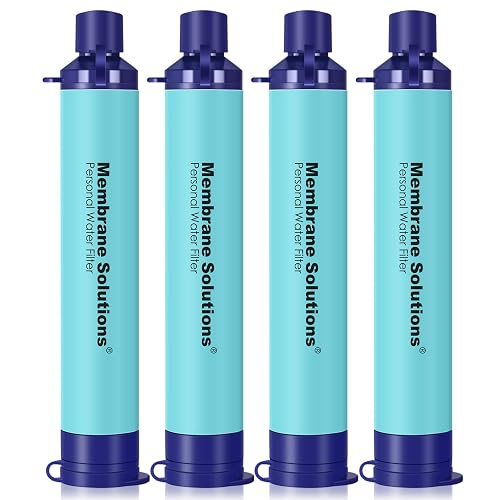
Membrane Solutions Personal Water Filter Straw S1

LifeStraw Personal Water Filter for Hiking
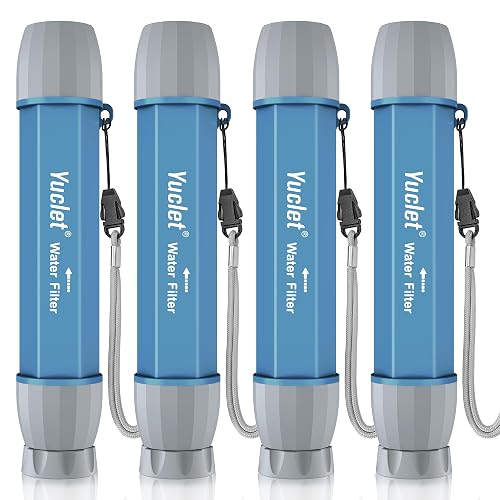
Yuclet Emergency Water Filter Straw 4-Pack
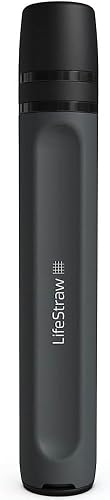
LifeStraw Peak Series Personal Water Filter Straw
Inside Each Recommended Option
The Membrane Solutions S1 targets hikers who want published lab credentials rather than just marketing claims. It carries NSF/ANSI 42, 372, and 401 certifications, which means third-party testing covers chlorine reduction, lead content, and emerging contaminant claims, not just the basic bacterial protocols most straw filters reference. The hollow-fiber membrane inside pushes water through 0.1-micron pores, small enough to block the bacteria and protozoa that cause most backcountry illness.
On trail, the straw connects to a standard 28mm bottle thread or works as a sip-direct tool from a stream. The trade-off shows up in flow rate: heavily silted water slows noticeably, so pre-filtering through a cloth helps in muddy alpine runoff. For most day hikers and weekend backpackers, that’s a small concession for the documentation.
A Few Strong Suits
- Third-party certified against NSF/ANSI 42, 372, and 401 standards
- Removes bacteria down to 0.1 microns, catching E. coli and similar organisms
- Compatible with standard 28mm bottle threads for gravity-style setups
- Compact enough for a side pocket on a 50-liter pack
Worth Noting
- Flow rate drops sharply when source water carries heavy sediment
- Sipping directly from fast-moving streams takes practice to avoid swallowing air
Who It Suits Best
Weekend backpackers and thru-hikers who want documented testing standards and carry at least one backup purification method.
Where Another Pick Suits Better
Day hikers chasing ultralight kit weight will find the LifeStraw Peak Series lighter and easier to grip during continuous sipping.
The original LifeStraw set the template that nearly every straw filter on the market still follows. At roughly 2 ounces, it weighs less than a deck of cards and disappears into a hipbelt pocket, making it a go-to for international travelers, ultralight thru-hikers, and anyone assembling a vehicle bug-out bag. The blue tube houses a hollow-fiber membrane rated for bacteria and protozoa, including the Giardia and Cryptosporidium cysts that turn a dream trip into a misery.
Compared to the Membrane Solutions S1’s lab credentials, this LifeStraw leans on brand recognition and field familiarity. There’s no screw-on bottle adapter included, so most users sip directly from a cupped hand, water bottle, or stream, which is faster but a bit awkward at first. For emergency kits stored for years, the sealed packaging and indefinite shelf life are practical wins.
Everyday Wins
- Weighs about 2 ounces, easy to forget in your pack
- Removes bacteria, parasites, and microplastics without chemicals
- Long filter lifespan rated for thousands of liters with proper backflushing
- No moving parts or batteries to fail in the field
Trade Offs
- No included bottle thread adapter for hands-free filtration
- Sucking through a clogged straw after silt exposure requires backflush muscle memory
- Does not remove viruses, which matters in some international destinations
Right Fit For
Ultralight backpackers and global travelers who prioritize proven simplicity and pack weight over documented certification stamps.
A Better Fit Elsewhere
Group leaders needing filters for multiple people should consider the Yuclet 4-Pack, which spreads budget-friendly redundancy across a whole trip.
Buying a single straw filter for a family of four means sharing, waiting, or accepting that one contaminated sip could derail the whole trip. The Yuclet 4-Pack solves that problem by handing out individual filters to each hiker, each rated for roughly 1,300 gallons of use. That kind of capacity matters when you run a Scout troop, lead group wilderness trips, or want a sealed backup in every vehicle and go-bag.
The membrane carries an SGS-tested report and targets microplastics down to 0.1 micron, matching the finer claims of single-straw competitors. In practical terms, four straws also mean you can hand one to a slower group member without bottlenecking at the water source. The honest read is that build quality feels a step behind the LifeStraw Peak, but redundancy compensates for that gap.
Real-World Strengths
- Four independent units spread risk across a group
- Rated capacity of about 1,300 gallons per straw with proper maintenance
- Filters down to 0.1 micron, blocking bacteria and fine microplastics
- Compact individual size fits in most first-aid kits
Points To Note
- Carrying four straws adds bulk versus solo setups
- No included bottle adapter in the standard package
Who Should Grab It
Trip leaders, large families, and emergency planners who want individual filtration units without buying four separate single-pack orders.
Feature Snapshot
Reach For A Different Pick When
Solo day hikers will save weight and cash by choosing the LifeStraw original, since carrying four straws for one person is overkill.
The Peak Series is LifeStraw’s answer to hikers who tried the original and found the grip uncomfortable after a long day. The Dark Mountain Gray housing uses premium sustainable plastics, BPA-free, with a slightly fatter body that fits better in cold or gloved hands. Flow rate is noticeably faster than the classic model, which means less sucking effort when you’re dehydrated at altitude.
Under the hood, the membrane still targets bacteria, parasites, microplastics, and silt, the same core threats the original handled. Where it changes the game is in daily usability: there are no extra parts to lose, the threading is more intuitive, and the matte finish resists scuffs inside a crowded pack. For most thru-hikers, that’s a real upgrade worth the modest price step over the classic blue straw.
Positive Takeaways
- Improved grip texture for cold, wet, or gloved hands
- Faster flow rate reduces sipping fatigue on long days
- BPA-free construction with sustainable plastic housing
- No loose caps or adapters to misplace in the field
Small Caveats
- Priced higher than the classic LifeStraw model
- Still does not remove viruses, so consider a chemical backup in high-risk regions
Made For
Thru-hikers and ultralight backpackers who want the original LifeStraw’s field track record with a more comfortable, faster-flowing mouthpiece.
Consider Something Else When
Hikers who need published NSF certifications for a regulated employer or group will find more documented options in the Membrane Solutions S1.
What Matters Most Before Choosing Water Filter Systems For Hiking
Filtration technology matters more than brand hype here. Hollow-fiber membranes dominate the straw-filter category because they physically block bacteria and protozoa down to 0.1 or 0.2 microns, without chemicals or batteries. That micron rating is the number that determines what gets caught and what slips through, so check it before anything else.
Lifespan tells you how long the membrane holds up before it clogs permanently. Most personal straws rate between 1,000 and 5,000 gallons, which sounds infinite but disappears quickly across a season of back-to-back trips. Backflushing with clean water after each use extends that life considerably, so build the habit before you need the filter to work.
Flow rate affects how hard you suck. Slower filters conserve battery-free simplicity but tire your jaw after a hot climb. Faster membranes feel luxurious on day one and clog faster on silty rivers, which is the classic trade-off.
Weight and packability decide whether the straw makes it into your pack at all. Anything over 3 ounces tempts you to leave it behind when space gets tight, and a forgotten filter is the same as no filter at all. Standard bottle threading adds hands-free flexibility for filling a Platypus or Smartwater bottle at camp.
Key Considerations Across These Picks
Pitfalls Shoppers Hit
Treating any straw filter as a virus remover is the most common mistake. Standard hollow-fiber membranes block bacteria and protozoa but miss viruses like hepatitis A, which slip through at 0.02 microns. Hiking in North American backcountry usually means bacteria and protozoa are the threats, while international travel to regions with poor sanitation may require chemical treatment or a UV pen alongside any straw.
Buying one filter for a group of five is the second trap. Each user should ideally carry their own unit, since sharing a single straw slows a trail crew to a crawl and creates a hygiene bottleneck. The Yuclet 4-Pack exists for exactly this scenario.
What The Higher Tier Buys
Spending more on a straw filter typically buys better ergonomics, faster flow, and recycled materials rather than improved filtration performance. The membrane science is largely standardized across this category, so the upgrade buys comfort, grip, and brand warranty support. For most weekend hikers, the mid-tier price hits the sweet spot; for daily-use backpackers, the comfort upgrade pays for itself in reduced fatigue over a long season.
Frequently Asked Questions
How long do personal straw filters actually last?
Most personal straws rate for 1,000 to 5,000 gallons, depending on the membrane and source water. Backflushing after each use extends that lifespan considerably. In muddy alpine runoff, expect shorter effective life than in clear mountain springs.
Can straw filters remove viruses like hepatitis A?
Standard hollow-fiber straw filters do not remove viruses, which are smaller than the membrane’s pore size. For international travel where viral contamination is a concern, pair a straw filter with chemical drops or a UV purifier.
Do I need to backflush my filter after every use?
Backflushing, which means forcing clean water backward through the membrane to clear debris, extends filter life and restores flow rate. Doing it after every use, especially on silty water, prevents permanent clogging and keeps sipping effort low.
Are these filters safe for international travel?
For most North American and European backcountry trips, yes. In regions with documented viral contamination risk, add a secondary purification method like iodine tablets or a UV pen to cover what straw filters miss.
What happens if my filter freezes?
Frozen water expands inside the hollow fibers and can crack the membrane, ruining the filter. In freezing conditions, keep your straw inside a jacket or sleeping bag where body heat prevents ice formation.
Final Take
Any of these four straw filters will outperform untreated stream water on your next hike. Solo ultralight hikers gravitate toward the LifeStraw classic or Peak Series for proven simplicity. Backpackers wanting lab documentation lean toward the Membrane Solutions S1. Group leaders and emergency planners get the most value from the Yuclet 4-Pack’s redundancy. Match the filter to your trip profile, pack it where you’ll actually carry it, and keep it accessible at every water crossing.